
Mailer 1 has been released!
Competitions
2027 ASCE Society Competitions Hosted at Pacific Southwest

ASCE Concrete Canoe Competition
Since the early 1970s, American Society of Civil Engineers (ASCE) student chapters have competed to be the best at designing, constructing, and racing concrete canoes. During that time, canoe mixtures and designs have varied, but the long-established tradition of teamwork, camaraderie, and spirited competition has been constant. Each year, teams, their associates, judges, and other participants build upon this tradition. This year, teams answered a call for Technical Proposals and Enhanced Focus Area Reports and are competing to be the winning bid on a prototype standardized canoe design for future concrete canoe competitions. Learn more about the competition.
AISC/ASCE Student Steel Bridge Competition
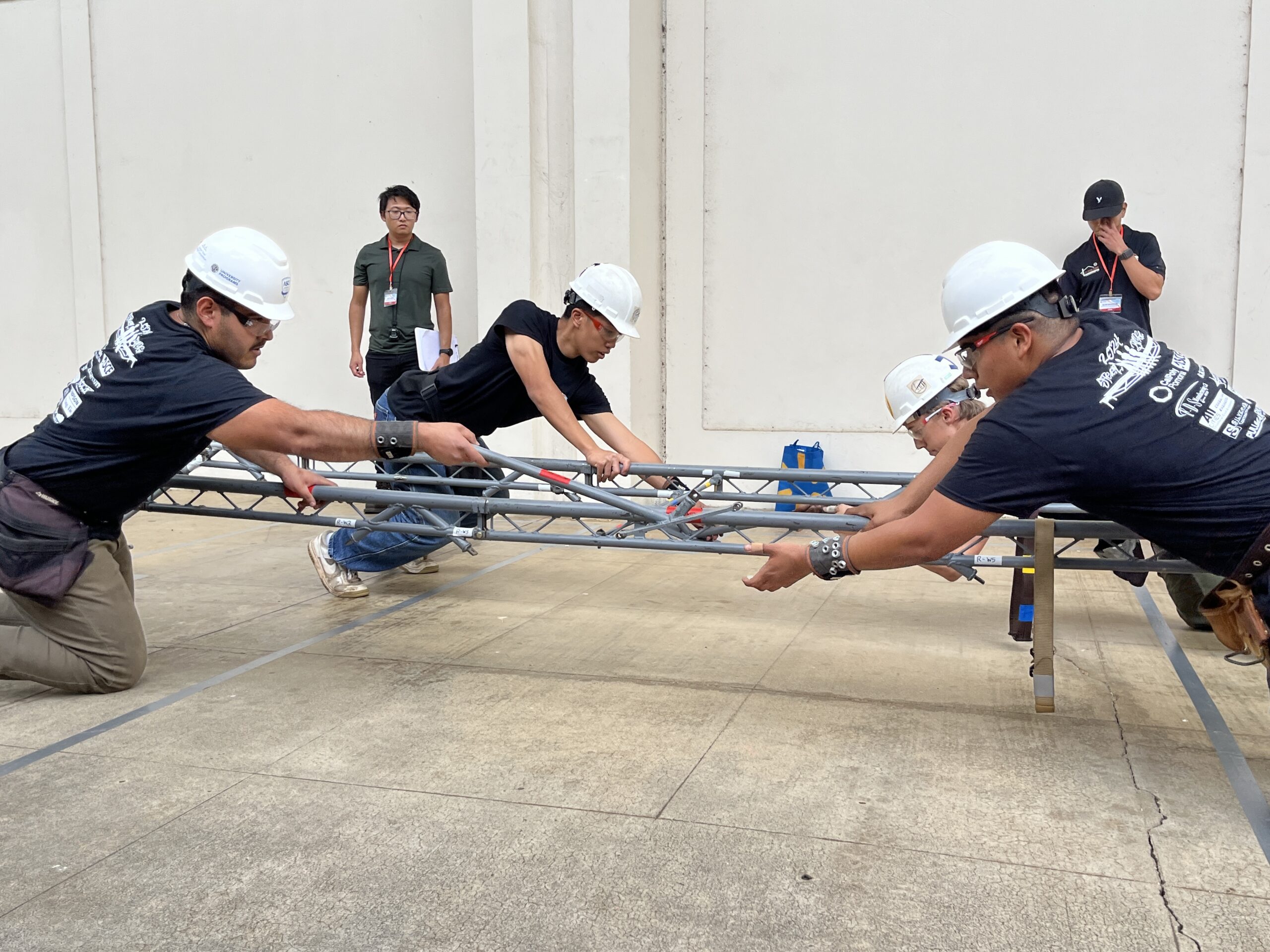
ASCE and the American Institute of Steel Construction (AISC) are partnering to offer the Student Steel Bridge Competition (SSBC) at ASCE Student Symposia.
The Student Steel Bridge Competition challenges students to extend their classroom knowledge to a practical and hands-on steel-design project that grows their interpersonal and professional skills, encourages innovation, and fosters impactful relationships between students and industry professionals.
Each student team develops a concept for a scale-model steel bridge to span approximately 20 feet and to carry 2,500 pounds according to the competition rules. The team must determine how to fabricate their bridge and then plan for an efficient assembly under timed construction conditions at the competition. Bridges are also load-tested, weighed, and judged on aesthetics.
ASCE UESI Surveying Competition
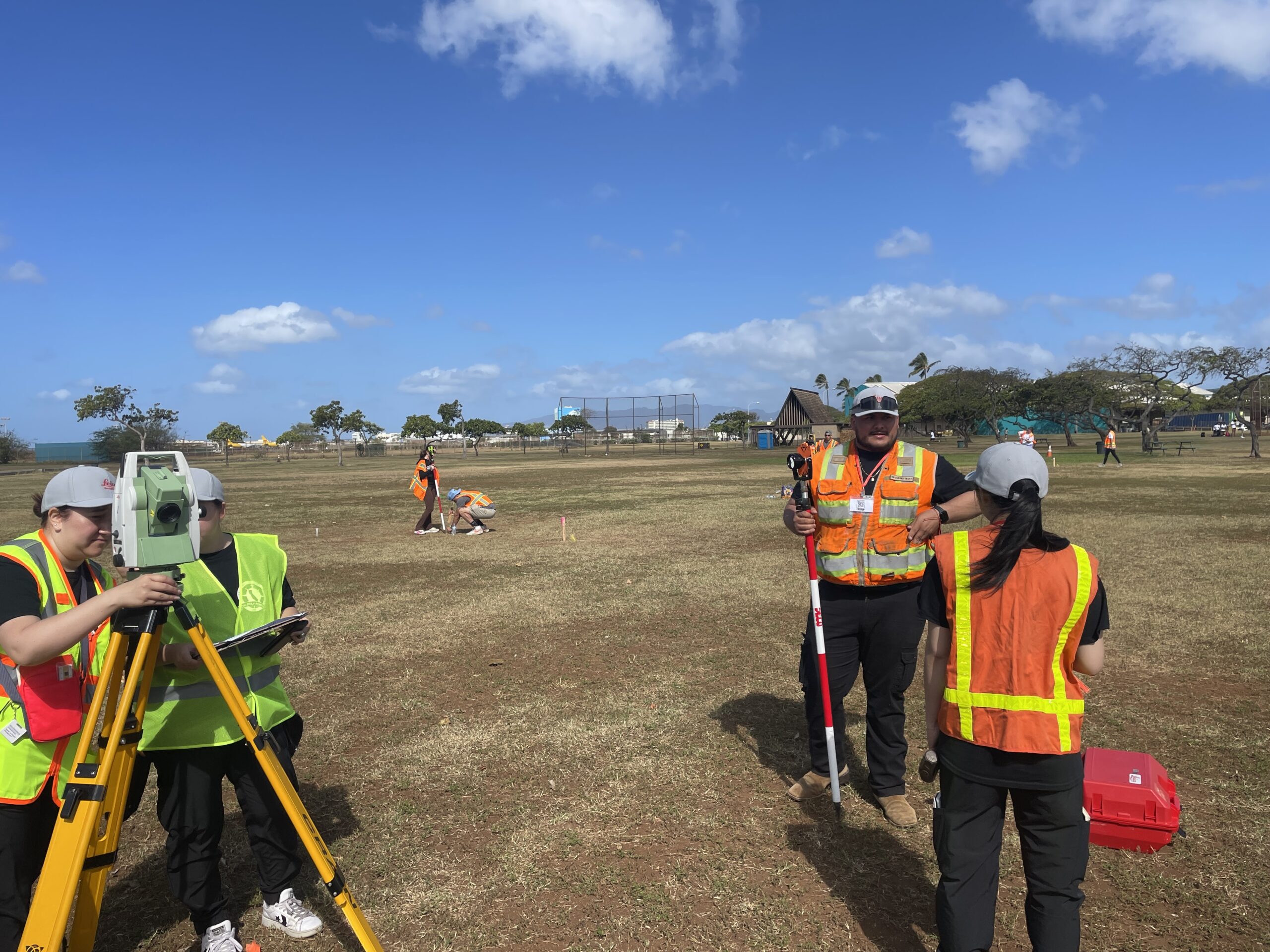
The ASCE UESI Surveying Competition’s educational and professional goals include a recognition of the importance of basic surveying principles to all civil engineering projects. Students will be required to use standard field and office equipment and procedures to solve common problems encountered in industry. A clear understanding of and ability to apply basic surveying principles will assist the graduate civil engineer in communicating and working with the surveying professionals on the job site and during the design process. Learn more about the competition.

Timber-Strong Design Build Competition (pilot)
ASCE has partnered with the American Wood Council (AWC), APA – Engineered Wood Association (APA), and Simpson Strong-Tie (SST) to pilot the Timber-Strong Design Build℠ (TSDB℠) Competition. The competition seeks student teams to design and build an artistically creative, two-story wood, light-framed building that is sustainable, aesthetically pleasing, and structurally durable.
This competition will continue to be offered as a pilot competition in 2027.
Learn more about the competition partners:
ASCE Sustainable Solutions Competition
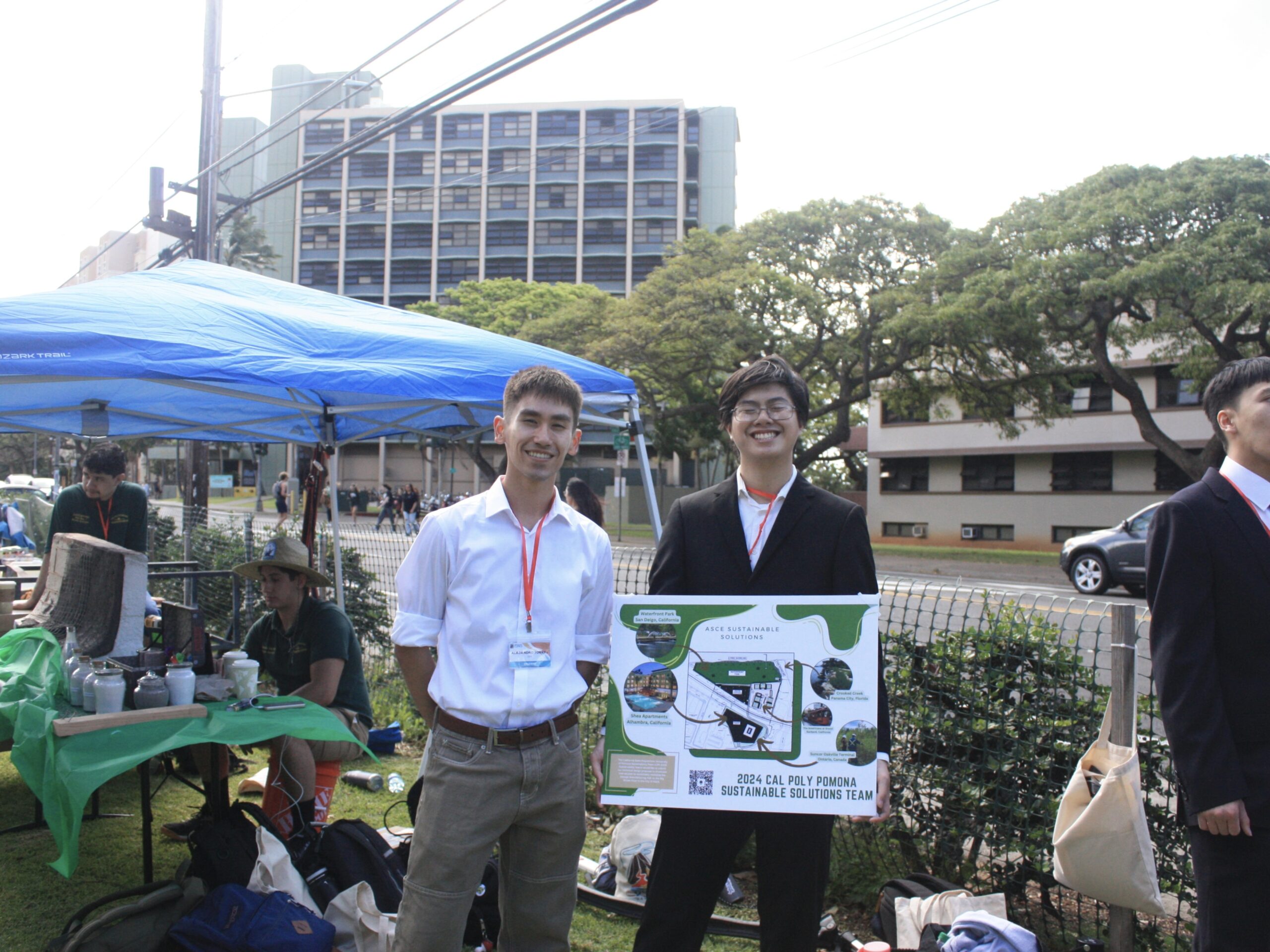
The ASCE Sustainable Solutions Competition challenges students to develop a stronger understanding of sustainability and learn to incorporate sustainable solutions into everyday problems that engineers incur. Students are encouraged to be creative in their solutions and use all resources available. Learn more about the competition.
2027 Topic
This year’s competition is a simulated competitive grant application. Teams will emulate a municipality, transportation planning organization, special district, or other government public authority and propose real-life projects that they would like to see implemented using sustainable practices within their own communities. The fictional 2027 Sustainable Surface Mobility Grant program uses the Institute for Sustainable Infrastructure’s Envision framework to serve as the basis to assess sustainability.

Symposium Paper
The ASCE Student Symposium Paper Competition emphasizes the importance of being able to write and present a paper as essential communication skills for all engineers and often necessary for advancement in your career.
Good faith participation in the ASCE Student Symposium Paper Competition, including submission and presentation by at least one (1) member of the ASCE Student Chapter, is a requirement to advance to an ASCE Society-wide Competition Finals. Competitions requiring this include Concrete Canoe, Student Steel Bridge, UESI Surveying, and Sustainable Solutions.
No other Society-wide competition report or paper may serve as a submission for the ASCE Student Symposium Paper Competition. Learn more about the competition.
Student Symposium Paper Competition topic:
Engineering for the Unprecedented: Evaluating the Civil Engineer’s Professional and Ethical Duty to Design Infrastructure Beyond Minimum Standards
In recent natural disasters, such as the 2023 Türkiye-Syria earthquake catastrophe and the 2025 Camp Mystic tragedy in Hunt, Texas, infrastructure designed to meet standard code was overwhelmed by extreme conditions – intense earthquakes and flash flooding, respectively. In both cases, technical compliance did not prevent loss of life or catastrophic risk to vulnerable populations and infrastructure. The ASCE Code of Ethics states that engineers must “hold paramount the safety, health, and welfare of the public.” However, engineers often face intense pressure to balance the level of design risk with strict client budgets, political timelines, and the minimum legal standards of local building codes.
Discuss whether a civil engineer has an ethical and professional obligation to model, plan and design infrastructure for conventional design standards and regulations AND events that exceed standards, even when those designs exceed current legal requirements, client preferences, or budgetary constraints. Please include specific infrastructure projects and/or failures – recent or historic – that support your claims.
Authors are encouraged to develop and apply their own original thoughts. The use of generative artificial intelligence (AI) and natural language processing models (NLP), such as OpenAI’s ChatGPT©, is neither encouraged nor discouraged. However, if such models are used, all instances shall be cited as work completed by the respective generative AI/NLP. Failure to cite all instances of generative AI/NLP use will be considered plagiarism.
Submission Due Date: March 1st
Submission Email: [email protected]
ASCE 3D Printing Competition
The ASCE 3D Printing Competition encourages the creative and practical application of additive manufacturing technologies within the field of civil and structural engineering. This innovative competition challenges students to explore how 3D printing can transform traditional design and construction processes by promoting precision, efficiency, and sustainability in modern engineering practice.
For 2026, the theme “Bridging the Future” places a special focus on the design and fabrication of bridges. Competing teams will be tasked with developing a 3D-printed bridge that is not only structurally efficient and durable but also demonstrates aesthetic appeal, constructability, and creativity. The bridge must satisfy specific geometric and dimensional requirements while being assembled in the shortest possible time. Through this challenge, students must balance form and function—creating a bridge that showcases both engineering excellence and design innovation.
Beyond technical performance, the competition highlights the evolving role of 3D printing in civil infrastructure, encouraging students to think critically about material selection, print orientation, and assembly techniques. It provides a platform for participants to engage in hands-on design, testing, and optimization while developing essential teamwork and problem-solving skills. Ultimately, the ASCE 3D Printing Competition inspires future engineers to embrace emerging technologies that will shape the future of construction and structural design, pushing the boundaries of what is possible in the built environment.